


 Connect with a PJM translator
 Font size
 Contrast version
 Monochrome version
 Text version
 Reset settings
Research Areas
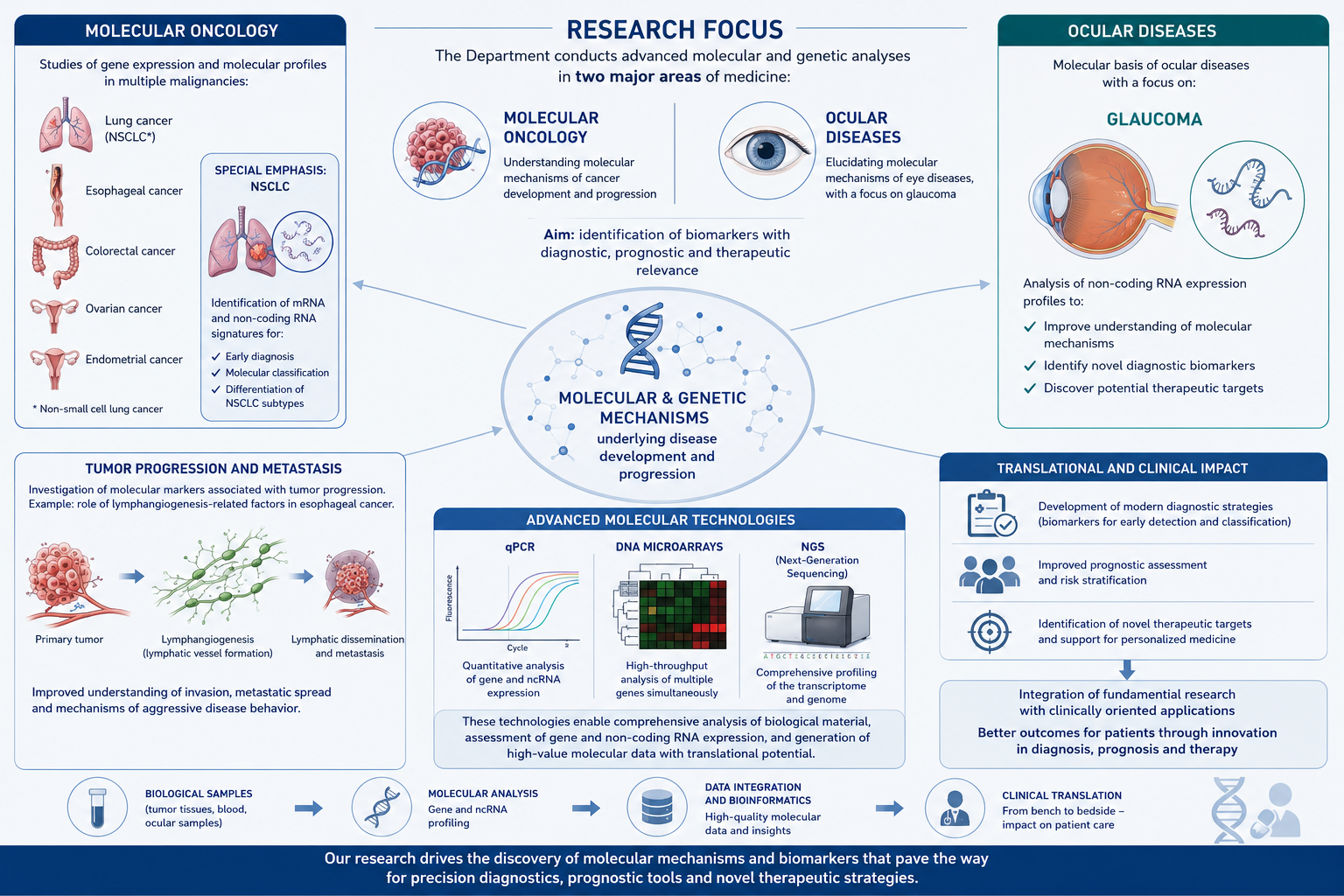
The Department’s research activities focus on advanced molecular and genetic analyses in two major areas of medicine: molecular oncology and ocular diseases. The scientific work of the Department is centered on identifying molecular mechanisms underlying disease development, as well as on the discovery of biomarkers with potential diagnostic, prognostic, and therapeutic relevance.
In the field of molecular oncology, the Department conducts studies on gene expression and molecular profiles across multiple malignancies, including lung, esophageal, colorectal, ovarian, and endometrial cancers. Particular emphasis is placed on non-small cell lung cancer (NSCLC), with research directed toward the identification of mRNA and non-coding RNA signatures that may support early diagnosis, molecular classification, and differentiation of NSCLC subtypes.
The Department also investigates molecular markers associated with tumor progression, including the role of lymphangiogenesis-related factors in esophageal cancer. These studies contribute to a deeper understanding of tumor invasion, metastatic dissemination, and mechanisms associated with aggressive disease behavior.
A second major research area involves the molecular basis of ocular diseases, with a particular focus on glaucoma. Research in this field includes analyses of non-coding RNA expression profiles, which may improve understanding of glaucoma-associated molecular mechanisms and facilitate the identification of novel diagnostic biomarkers and potential therapeutic targets.
The Department employs advanced molecular biology methodologies, including quantitative real-time PCR (qPCR), DNA microarrays, and next-generation sequencing (NGS). The application of these technologies enables comprehensive analysis of biological material, assessment of gene and non-coding RNA expression, and generation of high-value molecular data with translational potential.
The Department’s scientific activities integrate fundamental research with clinically oriented applications. The results obtained may contribute to the development of modern diagnostic strategies, improved prognostic assessment, and the identification of novel approaches in personalized medicine.