
 Connect with a PJM translator
 Font size
 Contrast version
 Monochrome version
 Text version
 Reset settings

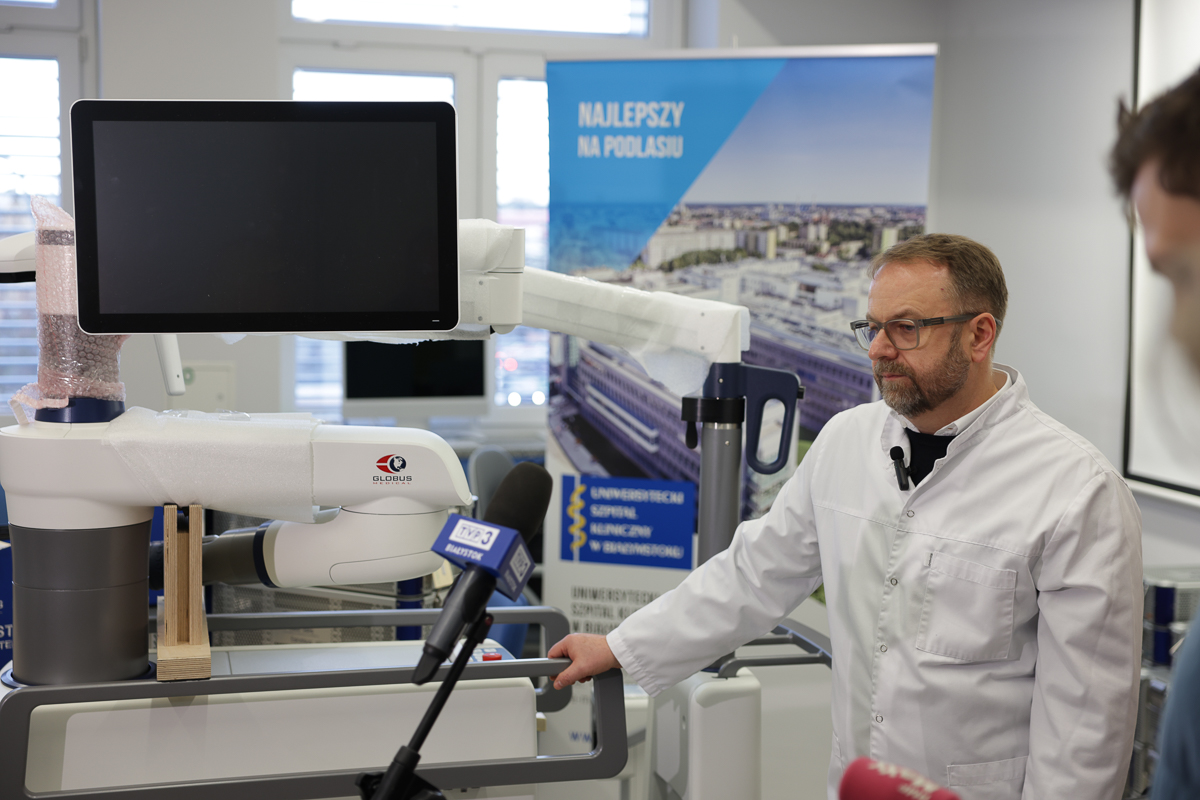
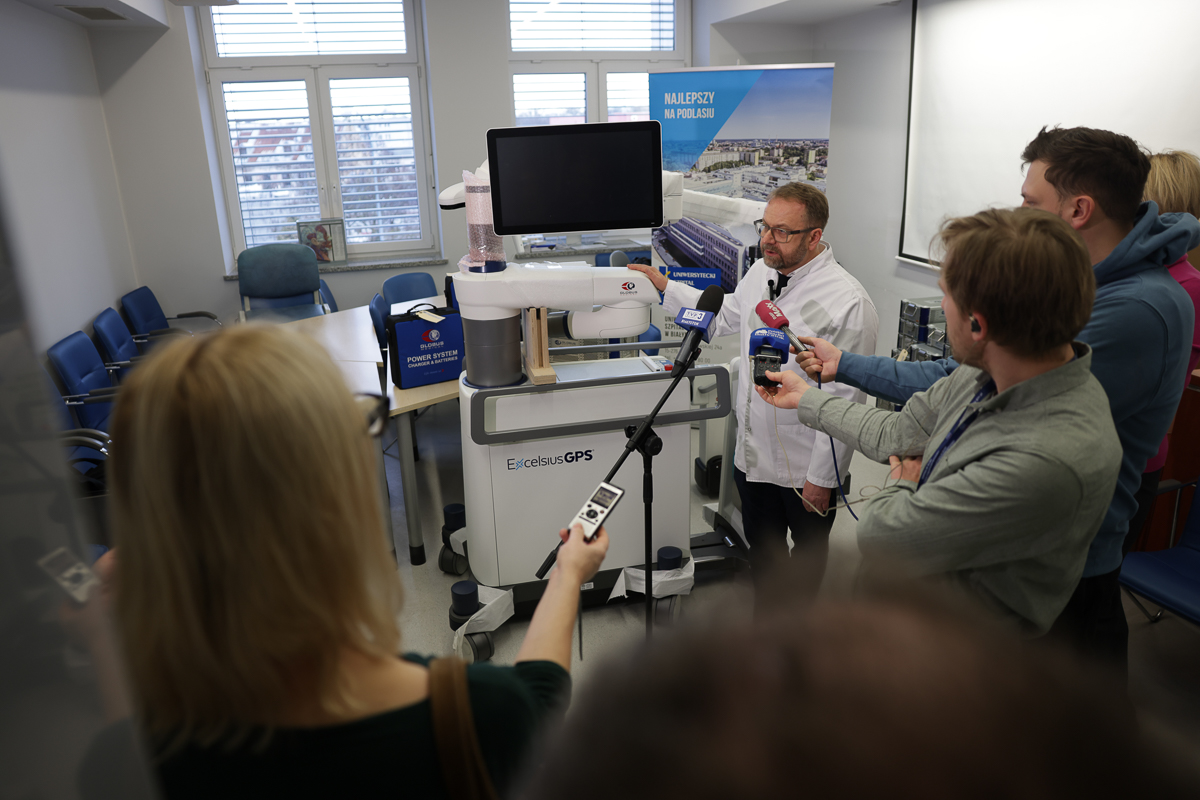
We are entering not the 21st century, but the 22nd century, said Dr Tomasz Łysoń, head of the Neurosurgery Clinic at the University Clinical Hospital in Bialystok, during a press conference today. This is a technological leap, a kind of Copernican revolution. Of course, it is not the case that we will install these robots and immediately use both systems to their full potential. Training in various areas is needed. Two colleagues from our centre have just travelled to the United States to train in head surgery. The training process will be quite long, because it is not possible to implement this by simply reading the manual.
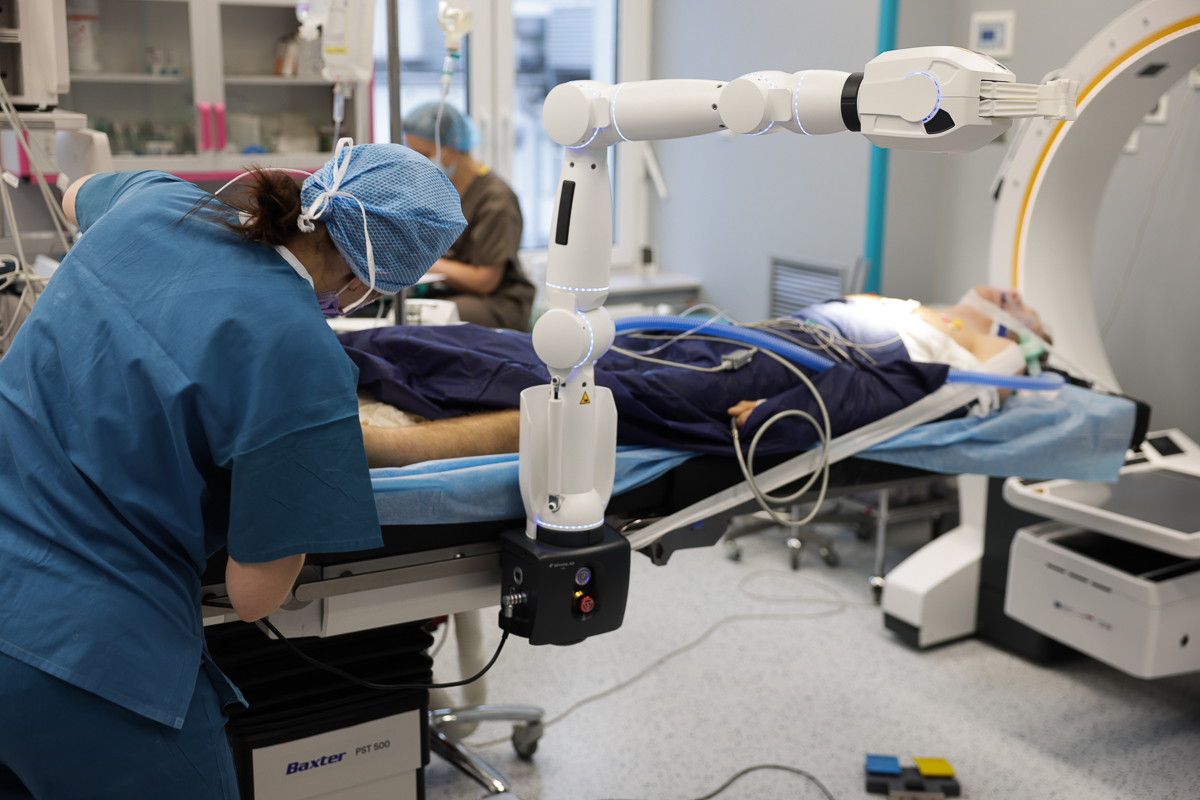
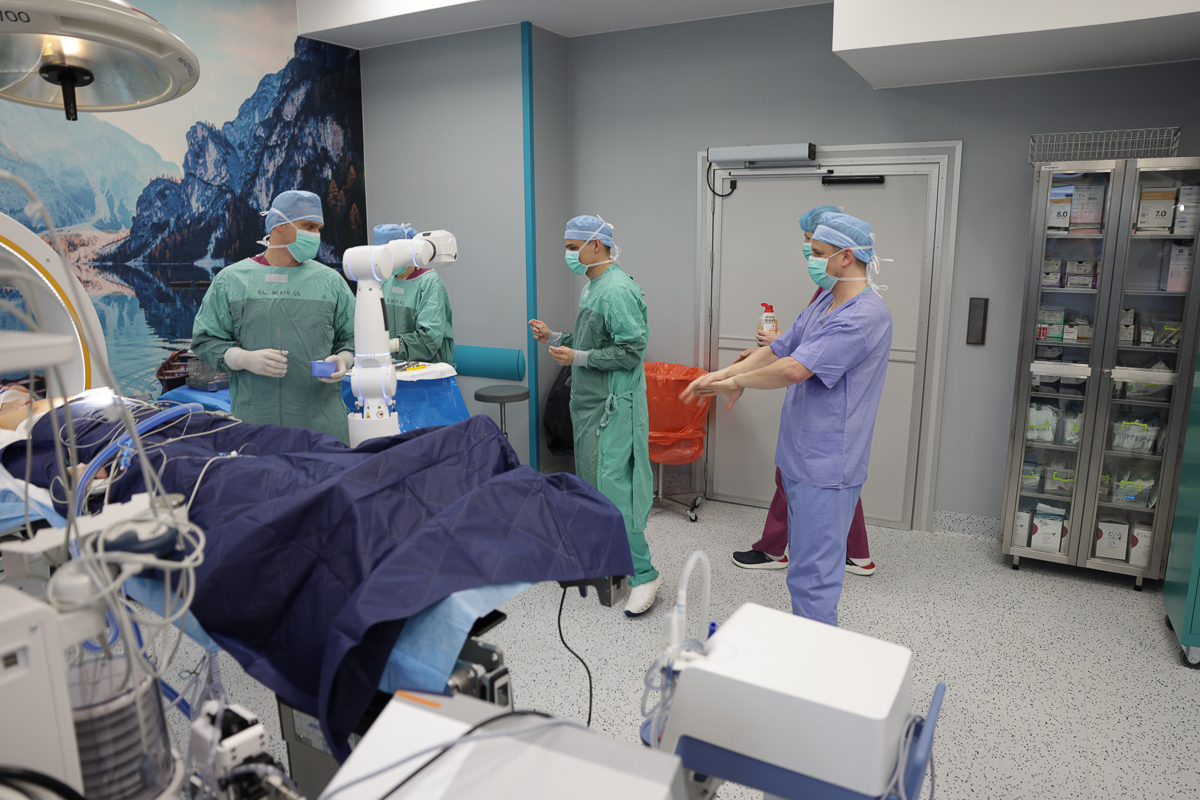
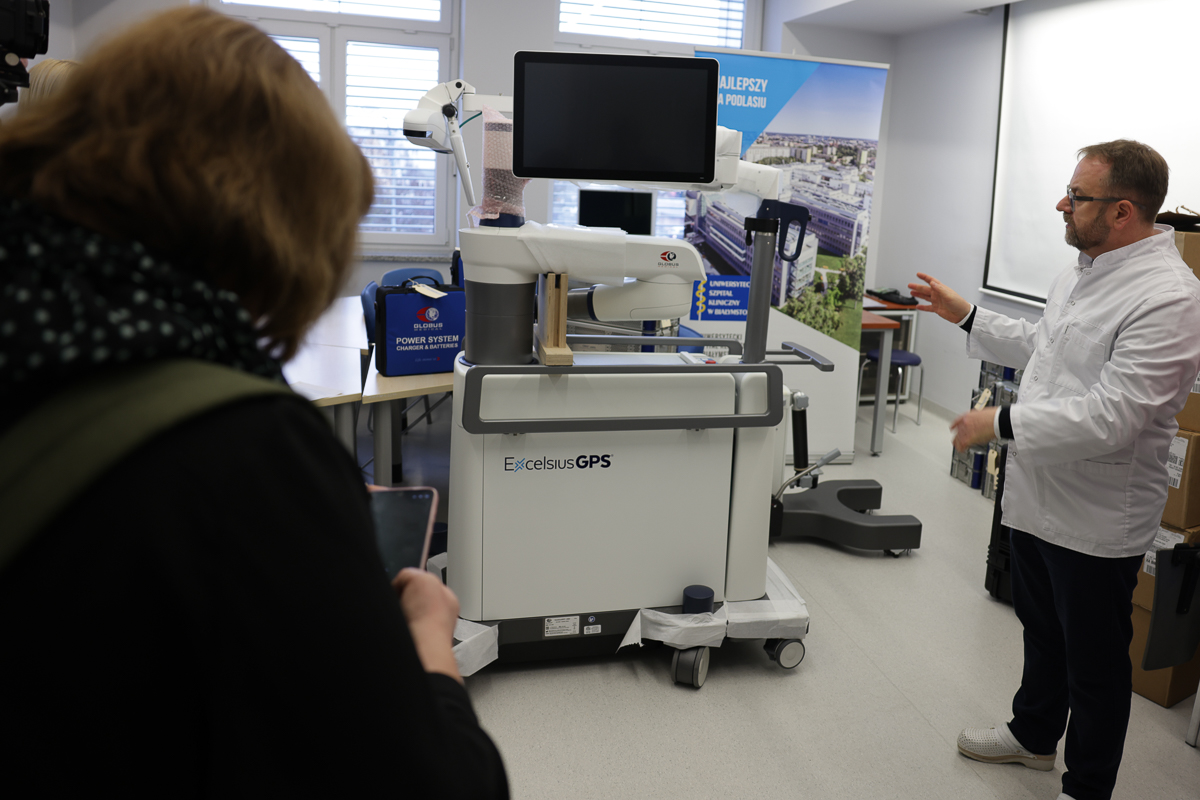
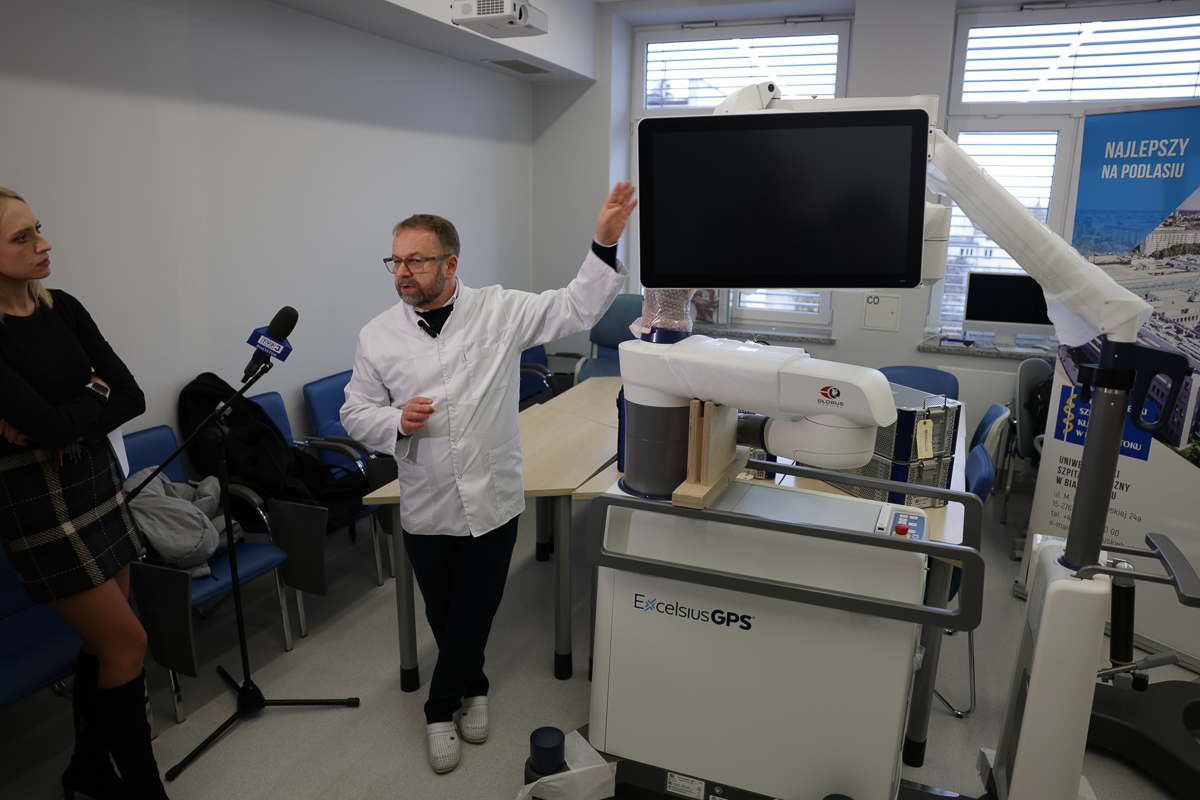
Neurosurgeons acknowledge that robots in neurosurgery are completely different from, for example, Da Vinci robots used in general surgery. Neurosurgery robots do not perform surgery on their own or replace the surgeon. They act as targeting and navigation systems, movement stabilisers, and precision arms that position instruments according to a planned trajectory – unlike the Da Vinci system, which is a telemanipulation system (the surgeon sits at a console and controls robotic arms that perform movements in the operating field).
How do these devices work?
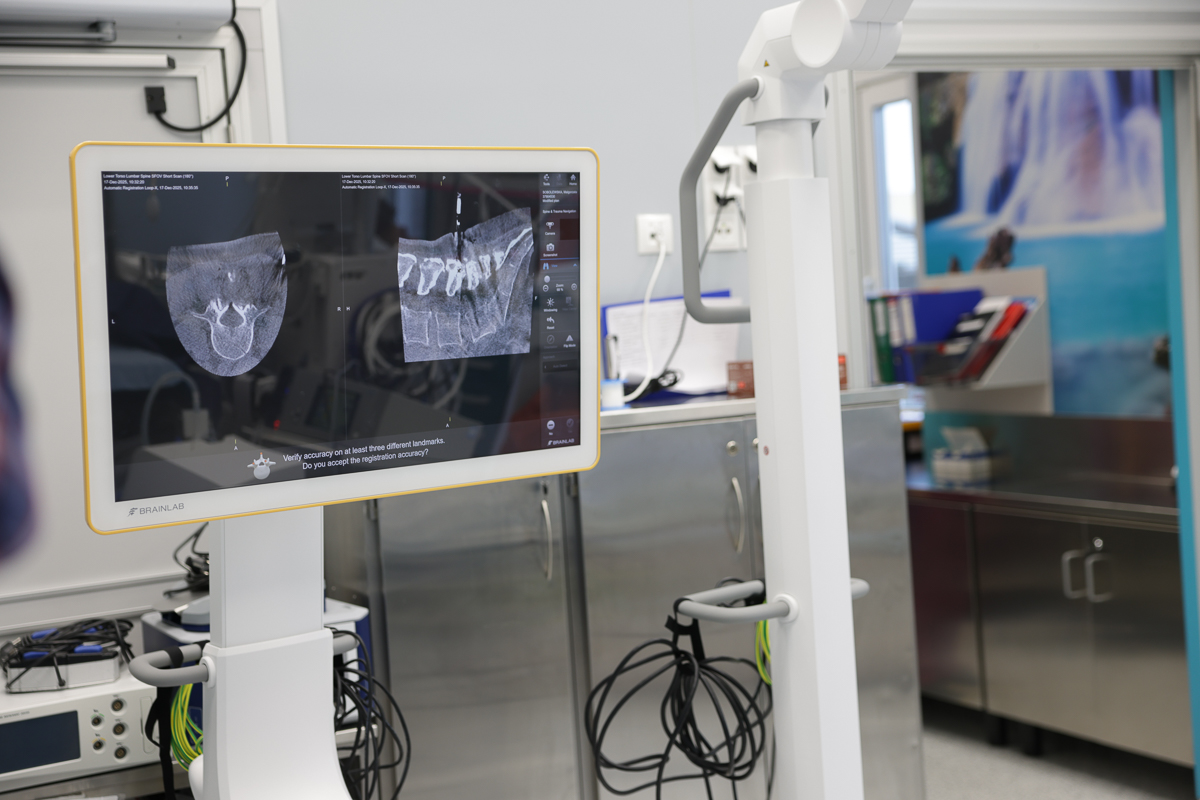
- Planning: The surgeon creates a virtual model of the spine or brain from CT/MR or 3D X-ray images and plans the route of the instruments – performing virtual operations on a computer monitor. Thanks to the entire system, neurosurgeons will know before the procedure what implants are to be used, how the spine will change, what its shape will be after a specific implant is inserted, how the screws will be inserted, where, and how long and thick they should be. They can plan the entire operation ‘dry’ and then carry it out with the help of a robot.
- Intraoperative assistance: The robot guides surgical instruments along trajectories planned before the operation, tracking their position in real time and avoiding sensitive structures.
- Precision: It ensures accuracy (in fractions of a millimetre) that is difficult to achieve with traditional methods, which is crucial in hard-to-reach, deep-seated areas.
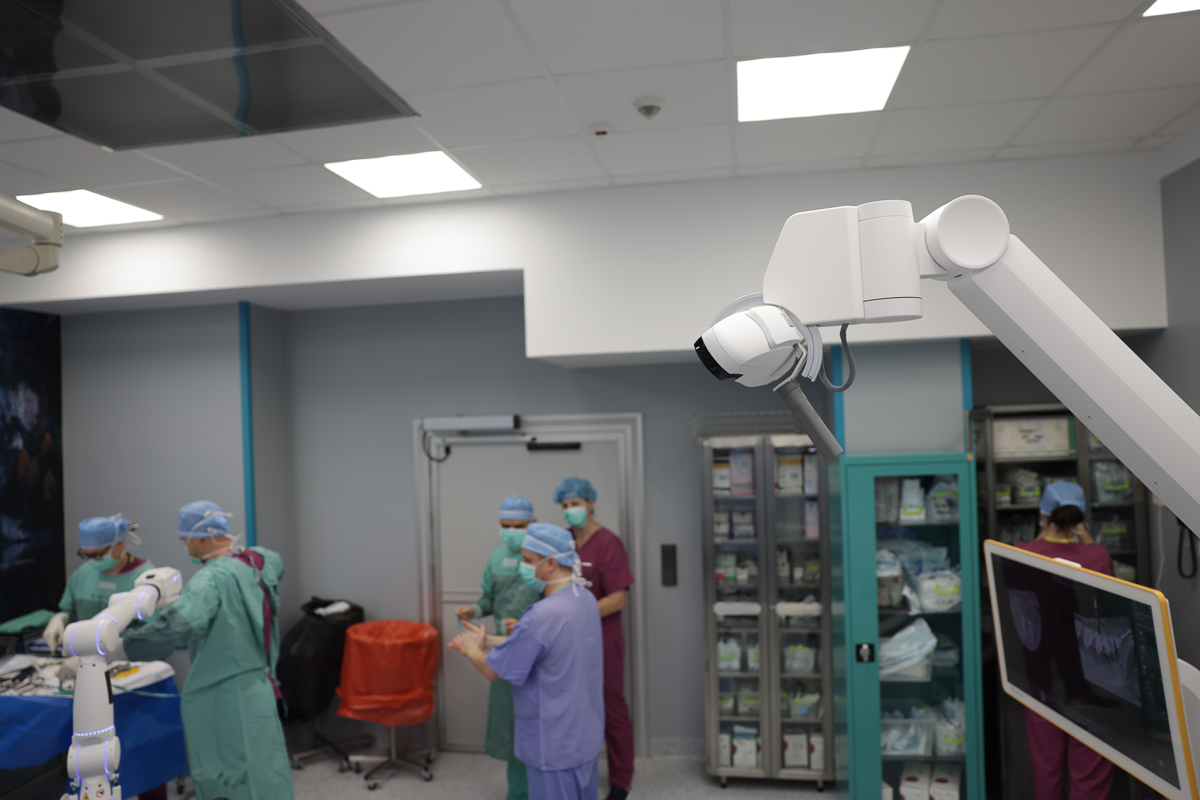
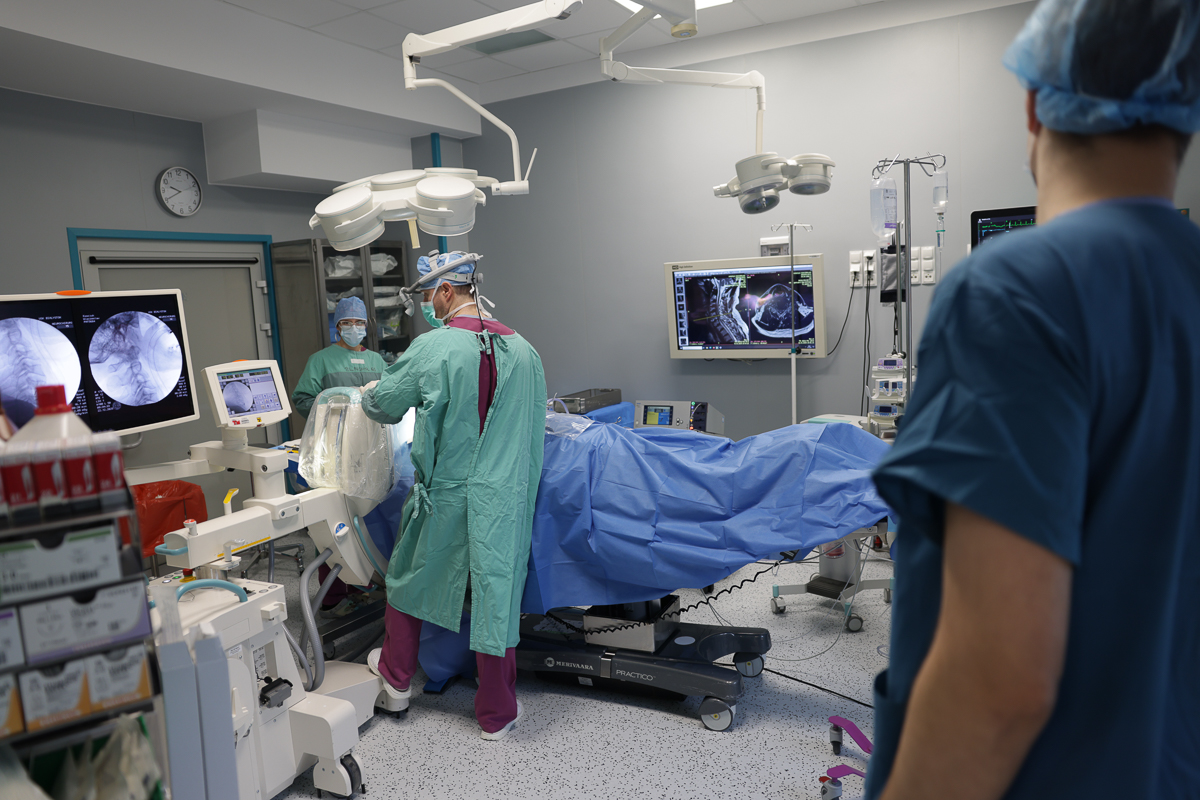
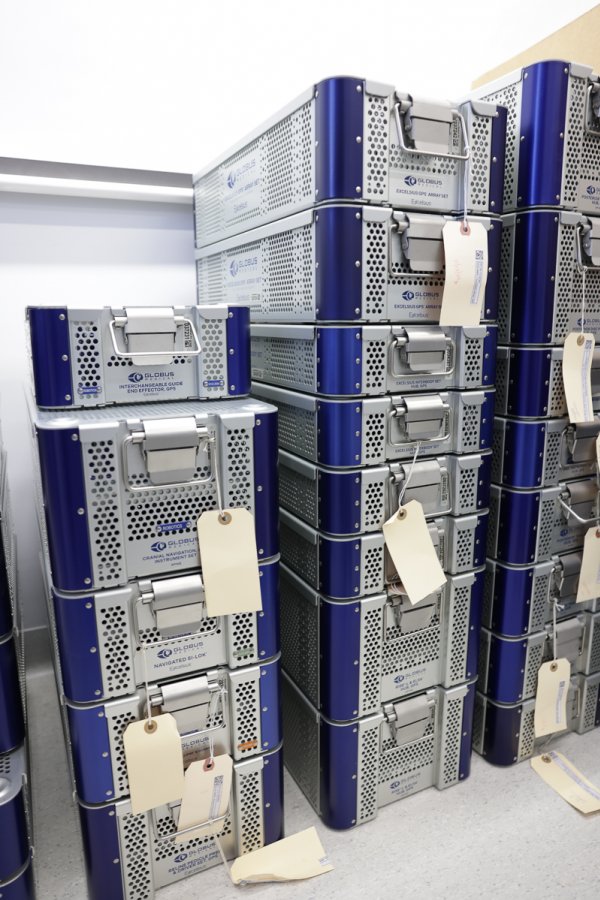
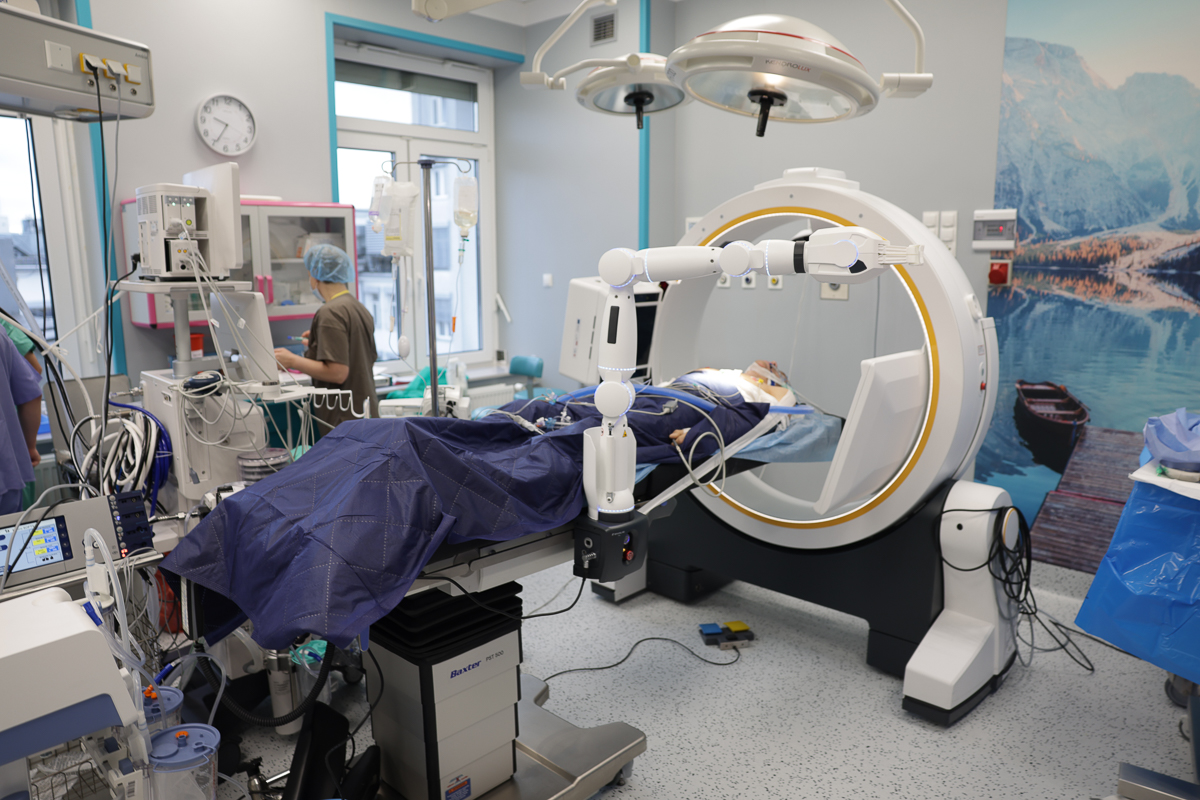
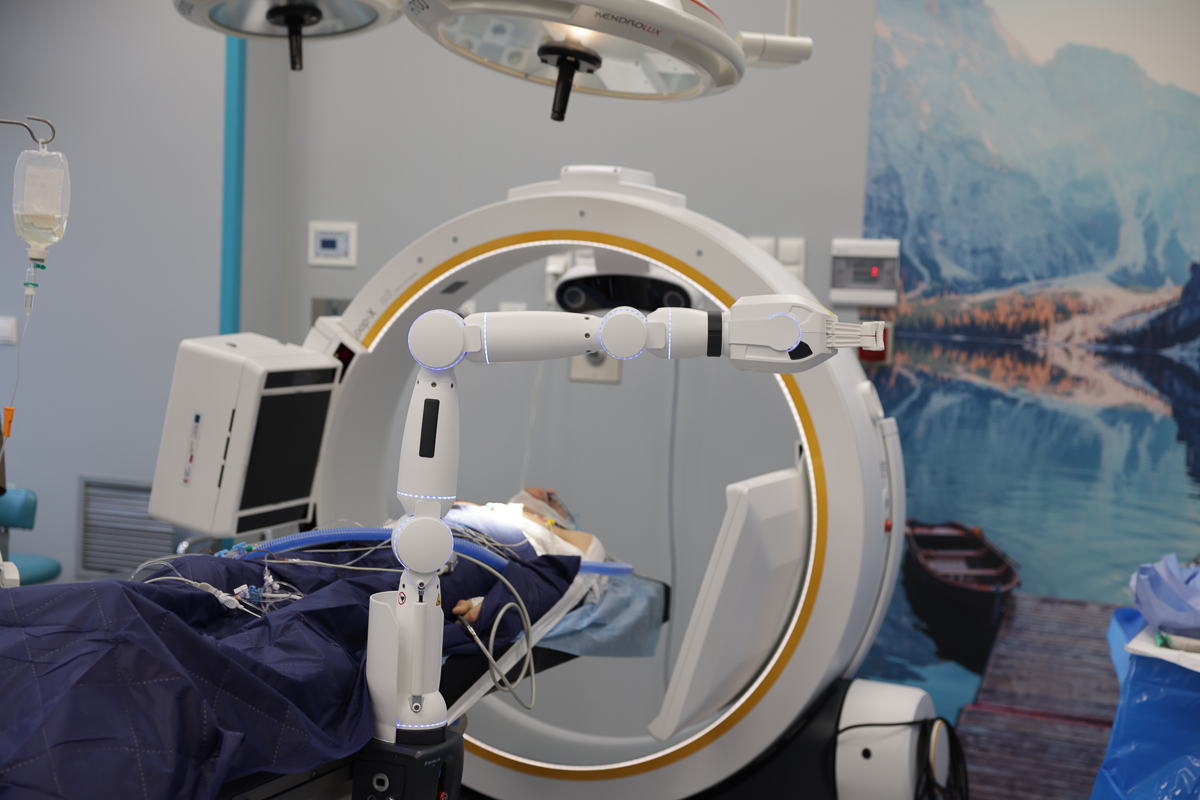
Robotic neurosurgical systems consist of many devices that work together. These include diagnostic devices (such as robotic intraoperative CT scanners), robotic devices that operate surgical optics, i.e. microscopes or exoscopes mounted on the robot's arm, and targeting devices that operate surgical instruments.
In addition, special goggles allow elements of augmented virtual reality to be introduced into the operating theatre.
‘Such a robot in an exoscope allows us to digitally operate optical systems that magnify the surgical field,’ explains Dr Tomasz Łysoń.
Other robotic arms, on the other hand, operate on the principle of precision sights, which allow them to hit exactly the planned target.
The robot allows us to hit the planned target in the deep areas of the brain with great precision,‘ says Dr. Łysoń. ’And we can use this to take biopsies, treat diseases such as Parkinson's, or insert electrodes for epilepsy diagnosis. The purchased robots will also be used to perform spinal surgery. The procedure is planned before we proceed with the operation, and the robot allows us to carry out the plan of implanting screws or various types of intervertebral implants with great precision. One of these robots allows spinal surgery to be performed from the rear, classic (from the back), but also has software to insert implants from the abdomen, so this is an additional feature.
For years, neurosurgeons have been using neurosurgical GPS, known as neuronavigation, and now they will have something that can be compared to driverless taxis, which are already operating in the USA and China. Such a ‘taxi’ will also be an intraoperative tomograph, which will move around the room ‘without a driver’. It will position itself in a position that allows the appropriate scan to be performed.
If we only have a navigation system at our disposal, the surgeon moves instruments that have a special marker. It is the surgeon who must demonstrate precision and hit the planned target, explains Dr. Łysoń. The robot, on the other hand, replaces the surgeon's hand. And it does so with incredible precision and in a completely repeatable manner. For each operation, we plan a trajectory for the insertion of the instrument, but when a human does this, minor deviations are always possible. In the case of a robot, the precision is like that of a watchmaker. And this is very important, for example, in cervical spine surgery, where there are tiny bones and the screws are correspondingly large. But we must be clear: we absolutely must monitor and supervise this robot, and the responsibility lies with us.
The University Clinical Hospital in Bialystok received almost PLN 80 million from the National Recovery and Resilience Plan. Of all the clinics, the biggest beneficiary is the Neurosurgery Clinic, which will receive equipment worth almost PLN 17 million for its operating theatre. The robotic intraoperative CT scanner with instrumentation cost almost PLN 6 million, while the robotic surgical navigation platform with equipment cost almost PLN 7 million.
The Neurosurgery Clinic is the only facility of its kind in the macro-region. Patients with brain tumours (gliomas, meningiomas) and tumours of the spinal cord and skull base (e.g. pituitary tumours) are diagnosed and treated here. Approximately 2,500 neurosurgical operations are performed annually in four operating theatres. The centre in Białystok is also known in Poland for its specialisation in endoscopic brain surgery – performed through the eye socket and nose.